The pronounciation of the word "gif".
Which way the toilet paper should go.
The Oxford comma.
These are some of the most devisive topics on the internet. I imagine anyone reading this was ready to comment the "correct" way to do any of those things as soon as they started reading the list. And they'll likely defend that their way is THE RIGHT WAY, right up to death. Nothing ends a friendship faster than saying "jif" when your friend believes it's a hard G. I've seen people list the toilet paper thing as a fundamental red flag in dating. I've seen any of these create conversation threads hundreds of comments long, and become EXTREMELY heated. And yet, in the grand scheme of things, is there really anything less important? Why do we care so much for such relatively minor things?
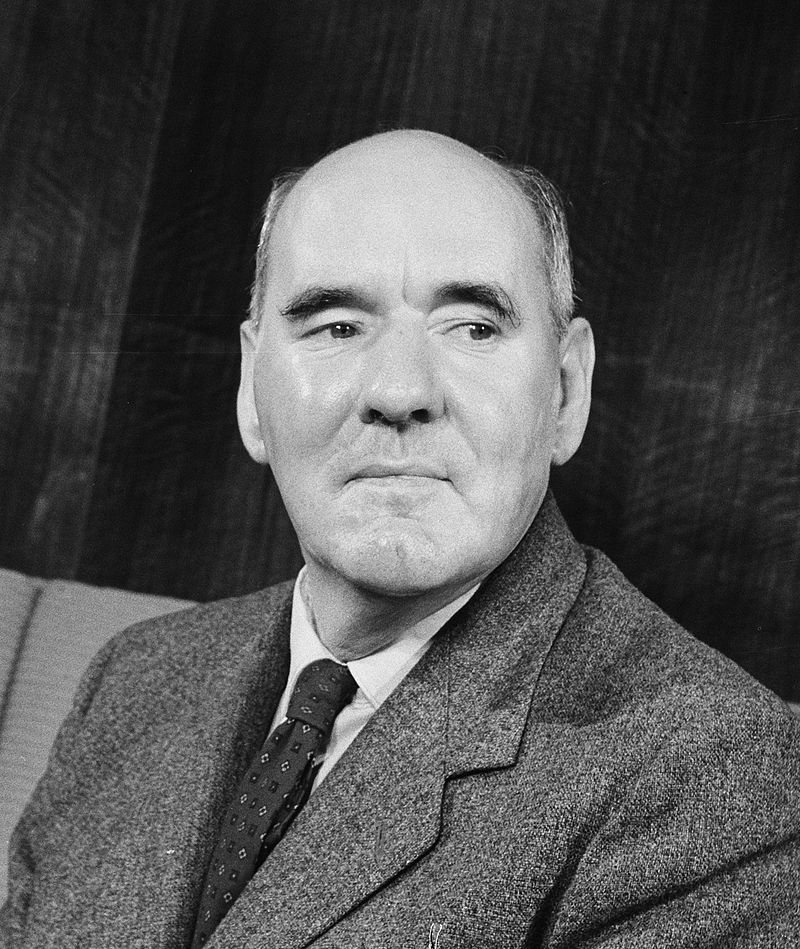
Cyril Northcote Parkinson was a British historian and Author, born in 1909. He is most famous for what is now known as "Parkinson's Law", which states, "work expands so as to fill the time available for its completion", but he also is responsible for a lesser known observation, known as "Parkinson's law of triviality". This law says "The time spent on any item of the agenda will be in inverse proportion to the sum involved." That is, the cheaper (or easier to understand) something is, the more time people will devote to it. That's why if we're given two discussions, people will ALWAYS gravitate to the easier to understand of the two. Imagine a scenario where a city is deciding on how to handle its hungry homeless. First item on the agenda, should we create a food bank? The city may spend 10 minutes on the topic. Second item, what color should we paint the building? Well, there goes the rest of the meeting, because you can guarantee every single person will need to weigh in on that topic.
As humans, we like to give our opinion. We need for our voice to be heard. And the simpler something is, the more confident we can be that we are right. That's why even complicated issues are distilled down to the very basic fundamentals. How do we fix gun problems in the US, for instance, boils down to two primary thoughts: Either we need more guns for everyone, or we need to get rid of all the guns. Any grey areas introduced will quickly be drowned out by these very black and white points.
This is why a news story, like the Harambe incident seems to "explode with experts". Suddenly everyone has a strong opinion on what happened, and what they would've done differently, and how the "Experts" that were there were right or wrong. It's easy to armchair quarterback from the safety of the internet, when we have what really only amounts to minimal information on a situation.
Instead of focusing on triviality and letting it overwhelm our life, we should ask ourselves if it's really important. Does the way toilet paper roll ACTUALLY matter in the grand scheme of things? Especially enough to base a decision on whether or not someone is dating material - even above "does he like children?" or "does she care about the environment?" We should ask ourselves if our opinion is important. Do we ACTUALLY know if handling the situation differently would've worked, and does that opinion really add anything to the narrative? And we should ask ourselves if the time to attribute to this is worth it. Most importantly, we should be aware of Parkinson's law of triviality, and do our best to avoid it.
Thursday, June 2, 2016
Sunday, March 13, 2016
The world is not going to hell in a handbasket.
The world has gone
to crap. Idiocracy is now a documentary. Every generation is getting
dumber, and there is more hate, more stupidity, and more negativity
in the world than ever before. We surely are going to kill ourselves
off as a species in the next hundred years.
This is something I
saw recently on a debate, roughly paraphrased from a few different
comments. The sentiment is the same, and multiple people were saying
it. Elsewhere, I see posts saying “I have no faith in humanity”
or people are all idiots, or cruel, or no longer care about anyone
but themselves. I usually counter those points when I see them, but
it comes up often enough that I've been thinking of writing something
about it. So, I'm going to tackle this in a couple of steps. First,
I'm going to explain why these statements are wrong. Then, I'm going
to explain why the people that think this believe as they do.
Part 1: Why the world is not crap.
To understand this,
it's important to understand statistics, and a lot of people don't.
That's why any time a discussion happens where someone says “Well,
I've seen people buying televisions with their food stamps!” they
immediately assume that rampant corruption in the welfare system is
everywhere, and no amount of evidence will convince them otherwise.
My favorite statement to show how statistics doesn't play well with
how we think about things is “The majority of people have an above
average number of legs.” It's totally true, and yet most people at
first glance, would say that it was wrong.
Anyway, the point is
this. Every generation is not getting dumber, in fact, we are the
smartest generation of humans to ever live on the planet. We ARE
getting more specialized, but that's not necessarily the same thing.
Sure, there are a lot of articles on the internet that say that the
average IQ is going down, but those articles fail to take into
account that the IQ scale is adjusted every few years to account for
people becoming more intelligent. So, a score of 100 today might have
rated a 120 a hundred years ago. That doesn't mean people are 20
points dumber, it means the scale was moved.
“But there're dumb
people everywhere! Here, look at all these
dumb people!” is the general response to this, followed by a
healthy dose of examples pulled off the internet, usually consisting
of Trump supporters. Sure, it's super easy to find examples of how
people are idiots. Of course, it's easier than ever before to find
examples of ANYTHING. That's because the internet is fantastic. But
that doesn't mean there are more of them, just that it's easier to
find them than it was, say, 30 years ago.
As far as the hate
and negativity, I can tell you that it's not true either. Patton
Oswalt made a fantastic facebook post about the Boston Marathon
bombing that I quote often.
This is a giant planet and we're lucky to live on it but there are prices and penalties incurred for the daily miracle of existence. One of them is, every once in awhile, the wiring of a tiny sliver of the species gets snarled and they're pointed towards darkness.But the vast majority stands against that darkness and, like white blood cells attacking a virus, they dilute and weaken and eventually wash away the evil doers and, more importantly, the damage they wreak. This is beyond religion or creed or nation. We would not be here if humanity were inherently evil. We'd have eaten ourselves alive long ago.
This is an important consideration. If every person in the world were evil, hate-filled monsters, society would crumble. Human beings are social creatures, and we have an innate genetic programming that drives us to do better for society, because when society succeeds, we succeed. When society fails, we get picked off and eaten by lions. (More on that in a bit.)
Another important thing to note is that we often mis-attribute the actions of others to ignorance or maliciousness. Why do people support Trump? Well, they must be racist idiots. There is no other possible answer. At that point, we stop looking and say, "yep, there's another example of nothing but hate and ignorance in the world!" But that's an entirely too simplistic way to look at it. The truth of the matter is that many of them are working for the same things that supporters of every other candidate are working for: To make the world a better place. It's the way to do that that is the issue, not the person. But if we assume they're idiots, we remove ourselves from the problem. "oh, you can't change people's mind, they're just stupid." I hear that all the time, usually with the phrase "I don't argue on the internet." And with that attitude, you'd be right. If you dismiss the person as an idiot, you don't have to work any harder to fix the problem. On the other hand, if you think of the person as an intelligent functioning member of society that wants the same things you do, but believes the way to get those things is different than what you do, well, that requires a little bit more effort. Oh, and the "you can't change people's minds" isn't exactly true either. I have changed people's minds on the internet, and I've had my mind changed by others. But it requires that we stop assuming others aren't as educated as we are.
Part 2: Why people believe the world is crap.
There's a couple of pretty huge reasons for this. The first is that the message is EVERYWHERE. The news only talks about things going wrong, the internet is full of people doing dumb things, evil things, or evil dumb things, gossip is rampant, and you can't go a day without hearing about something going horribly wrong. But the message isn't everywhere because there's more of it, the message is everywhere because we're more connected than ever before, so it's a lot easier to get the message. With Facebook, Twitter, Instagram, Youtube, Snapchat, and a host of other social media outlets doing something stupid will get it seen by more people faster than ever before. And once it's on the internet, it's there forever. Did people do stupid stuff 30 years ago? Sure, but there was no way that a million people would instantly see it when it happened.
But if that's true, why don't we see way more good stuff, as well? Why does it seem like all that attention is ONLY bad news? Well, bad news gets more attention. "Famous celeb gets drunk, destroys hotel room" is going to get a lot more views than "Famous celeb helps teach poor children how to read". Because of that, it skews the results of what gets written, aired, or shared. You could make a show that only highlights good deeds, but people want to see the bad things. It's like we're wired to pay more attention to negativity than the positive. And that's because we are.
This brings us to the second reason people believe the world is crap. Our brains care about negativity SIGNIFICANTLY more than positivity. The positive things are good, as far as our brains are concerned. But the negative things are much more important. Back when our brain programming was being written, a positive influence helps make the world a little bit better, but it doesn't really have much of a lasting impact. "Famous caveman makes fire" is great news, but without it you're still going to survive. "Famous caveman gets drunk, destroys cave" is a serious problem. It means the difference between life or death. So good things get some brain attention, while bad things get a big red stamp that says "PAY ATTENTION TO THIS. IT MIGHT KILL US." That's why even today, we notice bad things sooner, pay more attention to them, and remember them longer. That's why for a "successful relationship" you need to have 5 good interactions for every 1 bad one. And that's why it seems like the world is full of only negativity, when there's plenty of positive things happening all over the place.
Part 3: Conclusion
So, when you see negativity on the internet, remember that there is more positive stuff out there than negative. Keep in mind your own bias to negativity, and understand why it exists. Also, keep in mind that people want the same things you do, and don't immediately dismiss their thoughts as inferior. And finally, try to look for the positive. It's out there, it's just harder to stick in our brains, so we have to make a larger effort to keep it there. But also, pay attention to the bad things, because we don't want to get eaten. But most importantly, never let your brain trick you into believing the only thing out there are lions.
Friday, February 19, 2016
The world owes us nothing. But...
There's a comment I see fairly often on the internet, from Stephen Fry. The quote is often quoted by people who want to point out that the world owes you nothing, and should not cater to your demands. The quote is:
It's now very common to hear people say, 'I'm rather offended by that.' As if that gives them certain rights. It's actually nothing more... than a whine. 'I find that offensive.' It has no meaning; it has no purpose; it has no reason to be respected as a phrase. 'I am offended by that.' Well, so fucking what.
Essentially, what the person who uses this quote is saying is exactly that. "I don't owe you anything. I don't have to contain my own thoughts for fear of upsetting or offending others, and to demand that I do so is akin to an assault on my own freedom." Of course, that's absolutely true. Nobody owes anyone else anything. And it's important that we expect nothing from anyone else.
There's a flipside to that, as well, that came up on a facebook meme that I saw the other day. I think the message is either "don't expect people to treat you the same as you treat them" or "don't do things because you want people to treat you the same way." Personally, I read it as the latter. You shouldn't do things because you want people to treat you the same way. That's the problem with the Golden Rule: "Do onto others as you would have them do onto you" sort of implies that they WILL do onto you, and as I said above, They have no real obligation to. We forget that in society so often that it's pervasive. It's the whole point behind "The Friend Zone". "I was nice to her, but she didn't reciprocate in the manner I was expecting!" Television constantly uses the "I was nice to that person, but they spurned me" as the plot for any number of sitcoms. And it all boils down to the same thing: Expectations. We expect others to act in a certain way, and when they don't, we're disappointed. Offended, as it were.
So, we shouldn't expect people to cater to our will. Be that because it offends us, as Stephen Fry said, or because we expect them to reciprocate our own actions, as the meme points out. Nobody owes us anything.
Of course, that point is used often enough on the internet that if that were the end of it, I wouldn't even need to write this post. But it's not. Yes, it's true, but it's not the whole story. In fact, it's probably the biggest problem with society today. Because when someone says "nobody owes us anything." it's easy to derive from that, "I don't owe anything to anyone." While the first point is true, the second most certainly is not.
In the meme, I said that I prefer to interpret it to mean, "don't do things because you want people to treat you the same way." That's because there's a follow up to that sentence. The entire thing should be "don't do things because you want people to treat you the same way, do them because they're the right thing to do." We often forget that when we stand together, we are so much better than individuals. Kindness is a gift that enriches both the giver and the receiver. By taking care of others, we enrich the world. By endeavoring to not offend others, we make everyone's lives better.
So, it's important to remember that the world owes us nothing. But it's equally important to remember that we owe the world everything.
There's a flipside to that, as well, that came up on a facebook meme that I saw the other day. I think the message is either "don't expect people to treat you the same as you treat them" or "don't do things because you want people to treat you the same way." Personally, I read it as the latter. You shouldn't do things because you want people to treat you the same way. That's the problem with the Golden Rule: "Do onto others as you would have them do onto you" sort of implies that they WILL do onto you, and as I said above, They have no real obligation to. We forget that in society so often that it's pervasive. It's the whole point behind "The Friend Zone". "I was nice to her, but she didn't reciprocate in the manner I was expecting!" Television constantly uses the "I was nice to that person, but they spurned me" as the plot for any number of sitcoms. And it all boils down to the same thing: Expectations. We expect others to act in a certain way, and when they don't, we're disappointed. Offended, as it were.So, we shouldn't expect people to cater to our will. Be that because it offends us, as Stephen Fry said, or because we expect them to reciprocate our own actions, as the meme points out. Nobody owes us anything.
Of course, that point is used often enough on the internet that if that were the end of it, I wouldn't even need to write this post. But it's not. Yes, it's true, but it's not the whole story. In fact, it's probably the biggest problem with society today. Because when someone says "nobody owes us anything." it's easy to derive from that, "I don't owe anything to anyone." While the first point is true, the second most certainly is not.
In the meme, I said that I prefer to interpret it to mean, "don't do things because you want people to treat you the same way." That's because there's a follow up to that sentence. The entire thing should be "don't do things because you want people to treat you the same way, do them because they're the right thing to do." We often forget that when we stand together, we are so much better than individuals. Kindness is a gift that enriches both the giver and the receiver. By taking care of others, we enrich the world. By endeavoring to not offend others, we make everyone's lives better.
So, it's important to remember that the world owes us nothing. But it's equally important to remember that we owe the world everything.
Wednesday, January 27, 2016
Morden's Story
Morden
sat back in the old chair. Across from him was an old dwarf, the only
remaining customer in the inn. He'd already downed five pints of ale,
and had one eye on the door to the back room, hoping the barmaid made
a reappearance, and the other on Morden. Morden himself was
intoxicated, but not nearly to the level of the dwarf, even
accounting for the dwarf's sturdier build.
"So
are ya gonna tell me, or no?" the dwarf growled. He had
apparently lost hope in the barmaid. "A bargain's a bargain, you
said so yourself." Morden nodded solmenly. The dwarf had
something Morden needed, and the price was a story - Morden's story.
Typically, Morden didn't like to reveal that much about himself, but
it seemed he had no choice. He sighed, resigning himself to the role
of storyteller.
"As
you can tell, I am not a human, but my parents were. I am what's
refered
to as a Tiefling. Somewhere
in my past is a demon. I don't know where, or who my actual parents
were. You see, when they discovered what they had given birth to,
they abandoned me to a local church. I spent my younger years
serving the church of Mystra, although I had no love for religion. I
did like to learn, however, and picked up a trick or two from the
wizards that worshipped in the church. Eventually one even took me on
as an apprentice.”
Morden
paused to gauge the dwarf's continued interest, took a sip from his
own glass of wine, and continued. This wizard, it turned out, was
well connected with the local thief's guild. He worked very well as a
fence, you see, and occasionally would disable magical traps and the
like, or prepare scrolls or potions for special cases. But his
primary job in the guild was a fence. This is what he trained me to
do as well. I did reasonably well with the value of things, but where
I truly excelled was in charming the customer. You see, dispite my
appearance I'm quite approachable. And of course, thieves rarely care
about appearance anyway.” At this, Modren chuckled. He was quiet
for some time, until the dwarf coughed quietly, breaking his reverie.
“Oh yes,” he continued, “They took a liking to me easily
enough. And when people like you, they're more likely to let you pay
them a little less, or to offer you a little more. With me as a front
man, our little fencing operation did quite well. Quite well indeed.
“Of
course, at that point, my mentor realized that if
I was this good naturally, a little magic couldn't hurt. He began
training me in magic, and I took to it with ease. Learning was always
my natural state, and learning magic was no different. I picked up a
handful of spells and tricks, and consequently did even better at
my job. The guild profited, my master profited, even I profited a
bit. Of course, that got the attention of the city, and they did some
investigating.
“My
natural enemy, of course, is regret. People would often accept a
price – a fair price, mind you – but come to regret it later.
Oftentimes, one
has little recourse, especially when you feel cheated by the thieves
guild. One time, a boy came into the shop, barely a teenager, and
wanted to sell some jewelry. I took him as a common street rat, of
course. I never got out much, you see, and when I wasn't working the
shop, I was studying magic. So the who's who of the city had escaped
me. It turned out that this boy was not a street rat at all, but the
son of an Earl. The Earl, I found out later, wasn't a kind man, which
explained how the boy had found himself in our shop. He was on the
run, you see, planning on making his own way in the world. Of course,
I didn't care about
any of that. He offered me some jewelry, which I admit was valuable.
I offered him a price, which was reasonable, if on the low side. He
accepted and left. I never saw him again. Later the boy was picked up
by some guards, and when asked about the jewelry he had stolen from
his father, he insisted we had it. Of course, we didn't, it had
already been moved by the guild out of the city.
“well,
they came looking for the Earl's property. Completely destroyed the
shop. They found nothing, but that didn't stop them from threatening
to arrest us both. Of course, my charm won the day, at least for my
part. I convinced the guards that I was innocent, and had never even
seen the boy. I was there only as a scribe. They let me go, and
arrested my mentor instead. But they also confiscated all our
belongings. I only had the clothes on my back and the gold in my
pocket.”
Morden
paused for a long time, then. The
dwarf looked like he was finally feeling the effects of the ale. He
smiled a small, involuntary smile. The dwarf looked at him,
bleary-eyed. “So what 'appened to yer boss? Didja just leave him
there?” Morden nodded and began again.
“Yes.
I did. I assume the guild managed to get him out, or perhaps not.
Maybe he's still there. It was regrettable, but little could be done
about it. It was about that time that I decided the city might not be
the best place for me. I replenshed what stock I could, found a
caravan leaving town, and left. And now I'm here. So that's my story,
I hope it was interesting. And now, you have something for me, I
believe?”
The
dwarf chuckled. “'f course.” He pulled out a scroll case from his
bag, and pushed it across the table. Morden took it, opened it
briefly to ensure the contents were as desired, and then placed it in
his own bag.
“Excellent,”
Morden said. “Now, if you don't mind, I'll be heading on my way.
I'm sure you'll be covering the tab?” The dwarf nodded. Good,
Morden thought to himself, that means the spell still held a bit
longer yet. The dwarf would never have agreed otherwise. He stood
from the table, Pulled the hood over his head, and stepped out into
the night. He had work to do.
Tuesday, December 29, 2015
When does life begin? Does it matter?
When it comes to abortion, there's a point that always comes up on both sides of the argument: When does life begin? The discussion is always geared towards whichever side is using it. Pro-choice always goes later - it begins with at birth, or with brain activity (at around 28 weeks) or with a heartbeat (around 22 weeks). Pro-life always goes earlier - it begins at conception, or some other early metric. Furthermore, Pro-life likes to counterpoint the argument of later activity with, "Why can't I just kill a baby after it's born when I decide I don't want it?" or "Why can't I kill a teenager?"
We should stop using this argument, it doesn't matter. Let's discuss why. First, life doesn't "begin" anywhere. Life continues. A baby doesn't magically come alive the second it's born, nor is that status granted on it any time between conception and birth. Indeed, the component parts of the fetus - the sperm and the egg were already alive before they merged. Those cells came from other living cells, and in the mother's case, the eggs were created LONG before she even had sex, much less became impregnated or gave birth. The idea that life begins anywhere is a false yardstick, and it only hurts the cause of pro-choice.
Instead, it's important to focus on the rights of the individuals involved. Roe v Wade said that laws against abortion were a violation of a woman's rights granted by the fourteenth amendment. That amendment says:
This has evolved into the concept of bodily autonomy. To put that simply, a woman has a right to do what she wants with her body. Even if that means the life or death of another human being, born or unborn. Just like I can't force you to give up a kidney to me if I'm dying of kidney failure and you're my only match. It's pretty straightforward, actually.
Of course, the common response to this, and the one that I received in a conversation that lead to the writing of this post is, "but what about the baby's rights? Doesn't it deserve to live?!?" Well, sure, but not at the expense of the mother's rights. That's the way all of our rights work. I have the right to free speech - right up to the point that that speech impacts another person. I have the right to keep and bear arms - right up to the point that I use those arms against another person. I have the rights to life, liberty, and the pursuit of happiness, right up to the point that it affects another person's rights of life, liberty, and their own pursuit of happiness. The baby has rights, but if the baby's rights affect's the mother's, then the mother's rights win. "but, aborting the child affect's the baby's rights too!" Yes, you're right. But look at it this way - If I decide I like your house, and I move in, am I breaking a law? yes, obviously. it's YOUR house. Of course, kicking me out of your house violates my rights to life - If I'm homeless, I'm likely to die without a place to stay. Of course, that's not your problem, your house is yours, and I have no claim to it, therefore your rights trump mine. Well, the same argument applies to the woman in question. She has a right to her body. Saying she has MUST give up that right because there is a child inside it is the equivalent of suggesting that you MUST give up your own right to property because a homeless person has decided they live there now.
This is why the "when life begins" argument is irrelevant. Life is always there. Abortion isn't a question of life, it's a question of rights.
We should stop using this argument, it doesn't matter. Let's discuss why. First, life doesn't "begin" anywhere. Life continues. A baby doesn't magically come alive the second it's born, nor is that status granted on it any time between conception and birth. Indeed, the component parts of the fetus - the sperm and the egg were already alive before they merged. Those cells came from other living cells, and in the mother's case, the eggs were created LONG before she even had sex, much less became impregnated or gave birth. The idea that life begins anywhere is a false yardstick, and it only hurts the cause of pro-choice.
Instead, it's important to focus on the rights of the individuals involved. Roe v Wade said that laws against abortion were a violation of a woman's rights granted by the fourteenth amendment. That amendment says:
No State shall make or enforce any law which shall abridge the privileges or immunities of citizens of the United States; nor shall any State deprive any person of life, liberty, or property, without due process of law; nor deny to any person within its jurisdiction the equal protection of the laws.
This has evolved into the concept of bodily autonomy. To put that simply, a woman has a right to do what she wants with her body. Even if that means the life or death of another human being, born or unborn. Just like I can't force you to give up a kidney to me if I'm dying of kidney failure and you're my only match. It's pretty straightforward, actually.
Of course, the common response to this, and the one that I received in a conversation that lead to the writing of this post is, "but what about the baby's rights? Doesn't it deserve to live?!?" Well, sure, but not at the expense of the mother's rights. That's the way all of our rights work. I have the right to free speech - right up to the point that that speech impacts another person. I have the right to keep and bear arms - right up to the point that I use those arms against another person. I have the rights to life, liberty, and the pursuit of happiness, right up to the point that it affects another person's rights of life, liberty, and their own pursuit of happiness. The baby has rights, but if the baby's rights affect's the mother's, then the mother's rights win. "but, aborting the child affect's the baby's rights too!" Yes, you're right. But look at it this way - If I decide I like your house, and I move in, am I breaking a law? yes, obviously. it's YOUR house. Of course, kicking me out of your house violates my rights to life - If I'm homeless, I'm likely to die without a place to stay. Of course, that's not your problem, your house is yours, and I have no claim to it, therefore your rights trump mine. Well, the same argument applies to the woman in question. She has a right to her body. Saying she has MUST give up that right because there is a child inside it is the equivalent of suggesting that you MUST give up your own right to property because a homeless person has decided they live there now.
This is why the "when life begins" argument is irrelevant. Life is always there. Abortion isn't a question of life, it's a question of rights.
Friday, December 11, 2015
Trump - A possible future
Donald Trump can't win the election. EVERYONE says that. But, what if he did? Imagine this scenario.
Over the next few months, Trump continues to make abrasive and racist statements. He alienates many people, but he touches a nerve with a lot of the more xenophobic citizens in the country. However, the GOP begins to distance themselves from Trump, in an effort to hang on to moderate voters. At the GOP national convention, Trump gives his most inflammatory speech yet, inciting riots and hate crimes across the country. Nothing fires up a population like hate.
The GOP wisely admonishes Trump, and he completely loses support of the party. In the end, the GOP nominates Jeb Bush as their candidate. Meanwhile, the Democrats nominate Clinton, to the surprise of no-one. Predictably, many jokes are made referencing the 1992 Clinton/Bush race.
During the first Republican debate, Trump announced that he would still run as an independent if he did not win the nomination. True to his word, he announces that he was still going to run as such. The announcement is received with surprising amounts of support. The country is split almost evenly among all three candidates. Even then, nobody takes Trump seriously. The democrats attack Bush based on George Bush's policies, and the Republicans double down on attacking Clinton on her many issues. For the most part, they both largely ignore Trump. Trump, likewise, ignores them. Instead, he focuses on what's worked for him in the past – hatred. He continues to rave against Muslims, against hispanics, and expands his campaign to include a few other groups, including poor blacks, further igniting race issues.
Both the Clinton and Bush smear campaigns are incredibly effective. Few voters trust Clinton, and nobody wants a repeat of the bush years. Many decide to not vote at all, and 2016 proves to have the lowest voter turnout in history. The people that DO show up, though, are the people that are really fired up – namely, those who support Trump. Trump doesn't win the popular vote – barely getting 49% of the 20% turnout, but he wins enough to gain the Electoral votes to win the election. Trump is the 45th president of the United States.
In January, Trump wastes no time following through on his promises. Through an executive order, he suspends immigration of muslims or suspected muslims. He also initiates a program to secretly begins rounding up muslim citizens and placing them in internment camps. Over the next year, he continues to increase a message of hatred and distrust. He also solidifies his base in the administration. In January of 2017, he announces increased action in Syria, and calls for a full declaration of war. Maybe congress gives it to him, maybe they don't. In any case, He continues to glorify the American ideal, while at the same time further painting Islam as “the Great Enemy of America.” Additionally, Trump is extremely successful with his initiatives, and America is actually seeing successes that hasn't been seen since the 50s. People began talking about re-electing Trump for a second term.
In 2018, There's another terrorist attack on American soil. Trump chastises the Islam community. Muslim attacks increase at a staggering rate, and Trump begins to openly take Muslims into custody “for their own protection”. He feigns surprise at the attacks, but his message continues to encourage the hatred toward islam. In 2019, just as people begin talking about the next election, Trump instead declares martial law, and suspends elections indefinitely. There is some outcry, but they underestimate Trump's supporters. In 2020, The president of Mexico formerly announces they are closing their border, and begins arming the US border. Trump declares this as an act of war, and invades Mexico.
At this point, the rest of the world is in a crisis. Obviously, the outcry to the United State's actions is enormous, but there is little they can do. Still, NATO announces that the US membership has been revoked, and its members collectively declare war on the US, along with many other non-aligned countries. It's only a matter of time before the US is invaded.
Sure, it's not possible. Or, is it?
Over the next few months, Trump continues to make abrasive and racist statements. He alienates many people, but he touches a nerve with a lot of the more xenophobic citizens in the country. However, the GOP begins to distance themselves from Trump, in an effort to hang on to moderate voters. At the GOP national convention, Trump gives his most inflammatory speech yet, inciting riots and hate crimes across the country. Nothing fires up a population like hate.
The GOP wisely admonishes Trump, and he completely loses support of the party. In the end, the GOP nominates Jeb Bush as their candidate. Meanwhile, the Democrats nominate Clinton, to the surprise of no-one. Predictably, many jokes are made referencing the 1992 Clinton/Bush race.
During the first Republican debate, Trump announced that he would still run as an independent if he did not win the nomination. True to his word, he announces that he was still going to run as such. The announcement is received with surprising amounts of support. The country is split almost evenly among all three candidates. Even then, nobody takes Trump seriously. The democrats attack Bush based on George Bush's policies, and the Republicans double down on attacking Clinton on her many issues. For the most part, they both largely ignore Trump. Trump, likewise, ignores them. Instead, he focuses on what's worked for him in the past – hatred. He continues to rave against Muslims, against hispanics, and expands his campaign to include a few other groups, including poor blacks, further igniting race issues.
Both the Clinton and Bush smear campaigns are incredibly effective. Few voters trust Clinton, and nobody wants a repeat of the bush years. Many decide to not vote at all, and 2016 proves to have the lowest voter turnout in history. The people that DO show up, though, are the people that are really fired up – namely, those who support Trump. Trump doesn't win the popular vote – barely getting 49% of the 20% turnout, but he wins enough to gain the Electoral votes to win the election. Trump is the 45th president of the United States.
In January, Trump wastes no time following through on his promises. Through an executive order, he suspends immigration of muslims or suspected muslims. He also initiates a program to secretly begins rounding up muslim citizens and placing them in internment camps. Over the next year, he continues to increase a message of hatred and distrust. He also solidifies his base in the administration. In January of 2017, he announces increased action in Syria, and calls for a full declaration of war. Maybe congress gives it to him, maybe they don't. In any case, He continues to glorify the American ideal, while at the same time further painting Islam as “the Great Enemy of America.” Additionally, Trump is extremely successful with his initiatives, and America is actually seeing successes that hasn't been seen since the 50s. People began talking about re-electing Trump for a second term.
In 2018, There's another terrorist attack on American soil. Trump chastises the Islam community. Muslim attacks increase at a staggering rate, and Trump begins to openly take Muslims into custody “for their own protection”. He feigns surprise at the attacks, but his message continues to encourage the hatred toward islam. In 2019, just as people begin talking about the next election, Trump instead declares martial law, and suspends elections indefinitely. There is some outcry, but they underestimate Trump's supporters. In 2020, The president of Mexico formerly announces they are closing their border, and begins arming the US border. Trump declares this as an act of war, and invades Mexico.
At this point, the rest of the world is in a crisis. Obviously, the outcry to the United State's actions is enormous, but there is little they can do. Still, NATO announces that the US membership has been revoked, and its members collectively declare war on the US, along with many other non-aligned countries. It's only a matter of time before the US is invaded.
Sure, it's not possible. Or, is it?
Minimum Wage - How it really works
I read another article on raising the minimum wage today. Something that I haven't seen that I find really interesting is who pays for what. So to grossly simplify things, let's imagine there are 3 people here: The buyer, who buys the product, the worker, who runs the store, and the owner, who gets the profit. Now I know it's more complicated than that, but just bear with this example for a moment. Now, There's supposed to be a delicate balance here. The buyer buys the product, which gives the store money, allowing the Owner to both buy more product, and pay the worker. The Worker keeps the store running, so the owner can sell his goods and the Buyer has a place to buy the things he needs. In this scenario, everyone profits. The Worker gets a wage, the Buyer gets the product, and the Owner makes a profit.
But let's say it costs $20 for the Worker to live. The Owner only pays him $10. So where does the other $10 come from? Currently, it comes from taxes. The Worker has to use government assistance to cover that negative, either through food stamp programs, medicare, or welfare. Sure, people want to raise the minimum wage to $20, so that the Worker can live on salary alone, but here's the interesting bit. Right now, where does the government get the money to pay that $10 to the Worker? The Worker doesn't pay into it - they can't afford to. The Owner also doesn't pay into it, because of tax loopholes, and corporate subsidies. So nearly all of that additional $10 comes from the Buyer.
The point is, if minimum wage is raised, that means the Owner pays the difference, but right now, the Owner has tricked the system so that the Buyer pays it, as well as paying the Owner. It might be better for both the Buyer and the Worker if the Owner paid the Buyer a livable salary, but guess who decides that change should be made? That's right - The Owner. Doing that would actually be out of line with his own best interests. So the Owner convinces the Buyer that he pays the Worker enough, and that the Worker is just lazy, or greedy. That the Worker doesn't DESERVE more pay. And the Buyer buys it, since that's what Buyers do. The Owner says "I'd like to pay them more, but if I did, I'd have to raise the cost of everything you buy!" but doesn't mention that if he paid the Worker more, the Worker would in turn need less from the Government, meaning the Government would need less from the Buyer, meaning the Buyer would have more money.
To really fix this situation, the Buyer is the one that has to see the problem, and right now, they're just blind to it, either because they don't want to see it, or because the Owner has tricked them into thinking it's a non-issue. But next time you're the Buyer, think about how the Owner is treating the Worker, and decide if you really want to be complacent in that system.
But let's say it costs $20 for the Worker to live. The Owner only pays him $10. So where does the other $10 come from? Currently, it comes from taxes. The Worker has to use government assistance to cover that negative, either through food stamp programs, medicare, or welfare. Sure, people want to raise the minimum wage to $20, so that the Worker can live on salary alone, but here's the interesting bit. Right now, where does the government get the money to pay that $10 to the Worker? The Worker doesn't pay into it - they can't afford to. The Owner also doesn't pay into it, because of tax loopholes, and corporate subsidies. So nearly all of that additional $10 comes from the Buyer.
The point is, if minimum wage is raised, that means the Owner pays the difference, but right now, the Owner has tricked the system so that the Buyer pays it, as well as paying the Owner. It might be better for both the Buyer and the Worker if the Owner paid the Buyer a livable salary, but guess who decides that change should be made? That's right - The Owner. Doing that would actually be out of line with his own best interests. So the Owner convinces the Buyer that he pays the Worker enough, and that the Worker is just lazy, or greedy. That the Worker doesn't DESERVE more pay. And the Buyer buys it, since that's what Buyers do. The Owner says "I'd like to pay them more, but if I did, I'd have to raise the cost of everything you buy!" but doesn't mention that if he paid the Worker more, the Worker would in turn need less from the Government, meaning the Government would need less from the Buyer, meaning the Buyer would have more money.
To really fix this situation, the Buyer is the one that has to see the problem, and right now, they're just blind to it, either because they don't want to see it, or because the Owner has tricked them into thinking it's a non-issue. But next time you're the Buyer, think about how the Owner is treating the Worker, and decide if you really want to be complacent in that system.
Subscribe to:
Posts (Atom)

